



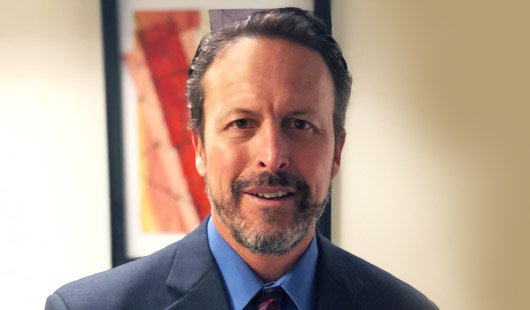
Attorney Mitchel Drantch - Denver, Colorado - AutoInjuryLaw.com

Home | Attorney Profile | Related Links | Contact
Finding the Right Car Accident Lawyer


Page moved. Go to colorado_auto_injury_law_overview.html

OVERVIEW OF COLORADO AUTO INJURY LAW

Colorado requires all owners and operators of motor vehicles to carry automobile insurance including Liability and Uninsured Motorist coverage. "No-Fault" coverage was required until its sunset repeal on June 30, 2003. Effective July 1, 2003 Colorado shifted to tort law.

While most auto insurers have reduced premiums since the change to tort law, the loss of medical and rehabilitation benefits required under No-Fault far outweighs the premium discount provided, if any. Now instead of having $100,000.00 or more under your own policy to cover medical and rehabilitation expense, as little as $25,000.00 may be all that is available to cover your damages including such expenses. Your No-Fault insurer was also prohibited from seeking reimbursement of such benefits from the settlement or judgment paid by the negligent party (tortfeasor). Under the tort system your health insurance company or the doctors themselves may be able to seek such reimbursement, potentially leaving the car accident victim with nothing. Therefore, in order to properly protect yourself and loved ones, it is highly advisable to raise your liability and uninsured motorist limits as much as financially feasible and, in the event of a car accident, consult with an experienced attorney like the professionals at The Law Offices of Mitchel S. Drantch. Our attorneys can ensure you receive the best medical treatment possible even if you do not have health insurance, help you get the bills paid and maximize your ultimate recovery.

Liability | Uninsured Motorist | No-Fault


LIABILITY

Liability coverage protects you in the event that you are at fault in causing a car accident and is the source of benefits when you've been injured by someone else's negligence. The minimum limit of liability coverage required by Colorado law is $25,000 per person with at least $50,000 for each accident if two or more people are injured and $15,000 for property/vehicle damage. If you are injured in a car accident in which someone else was negligent, you, or preferably your lawyer, may pursue a claim for bodily injury as well as damage to your vehicle. The claim is usually filed with the tortfeasor's insurer prior to filing a law suit against the tortfeasor. If the tortfeasor's insurer does not dispute liability, they may offer to cover your damages up to the limits of their liability coverage. It may also be possible to pursue the tortfeasor's individual assets for damages in excess of their insurance liability limits if you file suit against them and are successful in securing a judgment.

Bodily injury damages include compensation for medical bills, economic loss like missed employment, loss of earning capacity, disability, physical impairment, pain and suffering, loss of enjoyment of life, inconvenience, emotional distress, etc. Colorado has imposed limitations on the amount of non-economic damages like pain and suffering which you may recover. Currently, the "tort cap" is set at $366,000.00. The cap is actually lower for wrongful death claims.

Many insurance companies now use computer programs to calculate the value of these damages. The resulting calculations are typically low and they usually will not deviate from them. In addition, it is very common for the insurers to attack the amount of medical bills incurred as excessive or otherwise unreasonable. As a result, it is critical to have a competent attorney prepared to file suit and take your case to jury trial, if necessary. You must pursue your auto injury liability claim expeditiously since there is a three year statute of limitation from the date of the accident.

back to top

UNINSURED MOTORIST

(UM) coverage is compulsory in Colorado unless rejected in writing. UM coverage allows you to pursue damages through your own insurance company when you are involved in an auto accident in which the person at fault was uninsured. The minimum insurance limits and damages available are the same as those listed under the liability section. UM coverage may also be available when you are involved in a hit and run accident or when the person at fault did not have enough liability insurance to cover all of your damages, i.e., the party at fault was "under-insured." UM is only available as under-insured motorist (UIM) coverage when your own UM limits are greater than the liability limits of the tortfeasor, however, as explained below, for insurance policies which renew after January 1, 2008, the "offset" limitation does not apply . For example, if your damages are in excess of $25,000 but the tortfeasor only had that much coverage and no other assets to pursue, you may then pursue your own insurance coverage for the residual amount of your damages above and beyond the $25,000 available from the tortfeasor.

Although it may be possible to pursue UIM benefits even if you do not secure settlement in the full amount of the tortfeasor's policy, it is advisable to seek settlment at or near the amount of that policy. It is also imperative to secure consent from your own insurance company prior to settlement with the tortfeasor. In determining your eligibility to pursue a UIM claim you must subtract or offset (the offset does not apply to policies which renewed after January 1, 2008) the amount paid by the tortfeasor's insurance company from the amount of available UM coverage in order to determine the amount your UIM claim. Therefore, if the tortfeasor had liability coverage of $25,000 and there was only $25,000 in UM coverage available, you would not be able to pursue a UIM claim (For policies which renewed after January 1, 2008 you would be able to pursue a $25,000 UIM claim even if you were only carrying $25,000 in UM coverage since the offset would not apply anymore). If the tortfeasor had liability coverage of $25,000 and there was $100,000 in UM coverage available, you would then be able to pursue a UIM claim for a total of $75,000 (For policies which renewed after January 1, 2008 you would be able to pursue the $25,000 from the tortfeasor and the full $100,000 in UM coverage). Although it involves complex legal issues, you may be able to secure additional UIM coverage through the "stacking" of UM coverages or as a resident relative under the policy of another member of your household.

UM/UIM claims are subject to a three year statute of limitation, however, the period of time within which to pursue the claim may be extended depending on when it was determined that the tortfeasor was uninsured, whether suit has been filed against the tortfeasor or a settlement received from the tortfeasor within the initial three year period. As a result, determining the exact statute of limitation may also involve complex legal issues which exemplify the importance of seeking consultation with an experienced car accident attorney like the those at The Law Offices of Mitchel S. Drantch.

back to top

NO-FAULT

No-fault only applies to car accidents occurring prior to July 1, 2003. For accidents occurring on or after July 1, 2003, medical expenses become a part of the Liability claim as presented in the liability section. However, No-Fault (PIP) benefits may be available for car accidents occurring after the change of law in cases where PIP based insurance policies were issued prior to the change in the law, but renewed after the change. The change of law did not effect entitlement to no-fault benefits for claims arising prior to July 1, 2003.

Under No-Fault each person's own insurance company is required to cover their medical expenses and certain other benefits regardless of who was at fault in the auto accident. The minimum limits of coverage required are $50,000 for medical expenses for up to five years from the date of the car accident and $50,000 for rehabilitation expenses for up to ten years from the date of the car accident. If the full medical benefit is exhausted during the first five years, the insurer is required to apply any remaining rehabilitation benefit towards medical expenses, if requested by the insured. For the first year after the auto accident No-Fault coverage also provides for one hundred percent of the first $125 in lost wages, seventy percent of the next $125 in lost wages and sixty percent of the remaining lost wages up to a total of $400 per week as well as essential services up to $25 per day. Essential services are those which the injured person would have performed had they not been injured. Insurers will typically require a physician's note documenting the need for essential services. A small mileage reimbursement may also be available for doctor's appointments and other car accident related driving expense. Medical and rehabilitation benefits provided by No-Fault cover a broad spectrum of care including, but not limited to, traditional medicine, physical therapy, chiropractic, dental, optometric, and even emotional care, if necessary. In addition to a host of other expenses, No-fault will also cover ambulance and prosthetic expenses as well as non-medical remedial care such as occupational therapy.

Insurance payments must be made on a thirty day cycle and are mandatory as long as the care received is reasonable, necessary and related to the car accident. No-Fault Insurers provide discounts for participation in Preferred Provider Organizations (PPO), i.e., Sloans Lake Managed Care, Intracorp, QMC3 or a host of others. Within the PPO a person generally loses their ability to treat with the provider of their choice unless that provider is a member of the PPO plan. The PPO option may also involve managed care through which it may be necessary to secure pre-authorization for care. The amount of care extended may be limited by the PPO even if you believe care is still necessary. This is because PPO's typically have a panel of physicians to review requested care and it may be denied if the panel does not feel your care is reasonable, necessary or related to the auto accident. Although the insurance company may attempt to deny care even for those without a PPO plan, they may do so only upon an independent medical exam in which an impartial provider selected by the insurance division agrees that the requested care is not necessary. For these reasons the PPO option was not worth the small discount provided by your insurer. It is also another reason why it is important to consult with an experienced lawyer. At The Law Offices of Mitchel S. Drantch our attorneys will not only provide representation for your liability or uninsured motorist claim but will also insure that you get the best care possible.

back to top


DISCLAIMER:
The information contained in this website is for general reference only. Legal issues are complex and it is not uncommon for legal results to vary in situations that may appear similar. This information is not intended as a substitute for consultation with an experienced attorney, nor shall it establish any attorney/client relationship between the reader and this firm. This information is subject to change by legislation, regulation or court decision and no warranties as to its accuracy are expressed or implied.
1780 South Bellaire Street, Suite 584 | Denver, Colorado 80222
ph: 303-322-3190 | fx: 303-322-3192 | email: AutoInjuryLaw.com
Law Offices of Attorney Mitchel S. Drantch, providing auto accident, liability, no-fault and uninsured motorist information and legal services everywhere in Colorado including Denver, Boulder, Ft. Collins, Colorado Springs, Aurora, Littleton, Englewood, Lakewood, Westminster, Thornton, Northglenn, Lafayette, Louisville, Longmont, Wheat Ridge, Arvada, Broomfield, Brighton, Golden, Morrison, Evergreen, Bailey, Conifer, Genesee, Centennial, Sheridan, Castle Rock, Greenwood Village, Commerce City, Highlands Ranch as well as Aspen, Vail, Beaver Creek, Steamboat, Telluride, Breckenridge, Copper, Keystone, Winter Park and all other rural and Colorado mountain communities.

Copyright © 2008 AutoInjuryLaw.com